Terrazzo is experiencing a remarkable renaissance. Once dismissed as a relic of mid-century institutional design, this versatile composite material has been rediscovered by a new generation of architects, interior designers, and property owners who appreciate its unique blend of beauty, durability, and sustainability. Across Israel and the wider Mediterranean region, terrazzo is rapidly becoming the material of choice for discerning clients who demand floors that are as functional as they are striking.
The History and Revival of Terrazzo
Terrazzo has roots stretching back over 500 years to the workshops of Venetian marble craftsmen. Originally, it was born from resourcefulness: workers discovered that discarded marble chips could be set in clay and polished to create beautiful, durable surfaces. By the 15th century, terrazzo had evolved into a recognized art form, gracing the floors of palazzos and churches across northern Italy.
The material crossed the Atlantic in the early 20th century, becoming a staple of Art Deco architecture and mid-century modern design. Its ability to cover large areas seamlessly, combined with exceptional durability, made it the flooring of choice for airports, government buildings, hospitals, and schools throughout the 1950s and 1960s.
However, by the 1980s and 1990s, terrazzo fell out of fashion. The rise of cheaper flooring alternatives, changing aesthetic preferences, and a perception of terrazzo as "institutional" pushed it to the margins of the design world. But design trends are cyclical, and the early 2010s marked the beginning of terrazzo's comeback.
Several factors have driven this revival. The global shift toward sustainability has highlighted terrazzo's use of natural and recycled materials. The minimalist design movement has renewed appreciation for seamless, monolithic surfaces. Social media platforms, particularly Instagram and Pinterest, have amplified the visual appeal of terrazzo's distinctive speckled patterns. And critically, advances in material science have expanded what terrazzo can do and where it can go.
What Makes Modern Terrazzo Different
Today's terrazzo bears only a family resemblance to its traditional ancestor. While the fundamental concept remains the same — decorative aggregates embedded in a binding matrix — modern terrazzo systems offer capabilities that were unimaginable even two decades ago.
Epoxy-Based vs. Cement-Based Systems
Traditional cementitious terrazzo requires a minimum thickness of 15-20mm and relies on a portland cement binder. It is heavy, requires structural consideration, and offers a limited color palette determined by the cement base. Modern epoxy terrazzo, by contrast, can be applied at just 6-10mm thickness, weighs significantly less, and allows for virtually unlimited color options because the resin binder can be tinted to any shade.
Epoxy terrazzo also cures faster — typically within 24-48 hours compared to 28 days for cementitious systems — and offers superior chemical resistance, making it suitable for environments where traditional terrazzo would be vulnerable to staining or degradation.
New Aggregate Options
While marble chips remain a classic choice, modern terrazzo can incorporate an extraordinary range of aggregates:
- Recycled glass: Available in virtually any color, creates brilliant light-catching effects
- Mother of pearl: Adds iridescent shimmer and organic elegance
- Mirror fragments: Creates dramatic reflective surfaces for high-impact design
- Recycled porcelain: Sustainable option with excellent durability
- Metal shavings: Brass, copper, or aluminum for industrial-luxe aesthetics
- Semi-precious stones: Agate, jade, or quartz for ultra-premium applications
Thinner Application and Lighter Weight
Modern resin-based systems can be applied over existing substrates at thicknesses as low as 6mm, making terrazzo viable for renovation projects where floor height is constrained. This thinner profile also means significantly less weight — approximately 12-18 kg/m² compared to 35-45 kg/m² for traditional cementitious terrazzo — opening up applications on upper floors and structures where load capacity is a concern.
Design Possibilities
One of terrazzo's greatest strengths is its near-infinite design flexibility. Unlike mass-produced tiles or planks, every terrazzo floor is a unique composition crafted to the specific vision of the designer and client.
Color Palettes
Modern terrazzo allows for complete control over the color of both the binding matrix and the aggregate chips. Current design trends in Israel favor several distinct palettes:
- Warm neutrals: Cream, sand, and soft taupe backgrounds with white and beige marble chips — ideal for Mediterranean-inspired interiors
- Cool minimalism: Light gray or white bases with subtle gray and black aggregate — perfect for contemporary Bauhaus-influenced Tel Aviv apartments
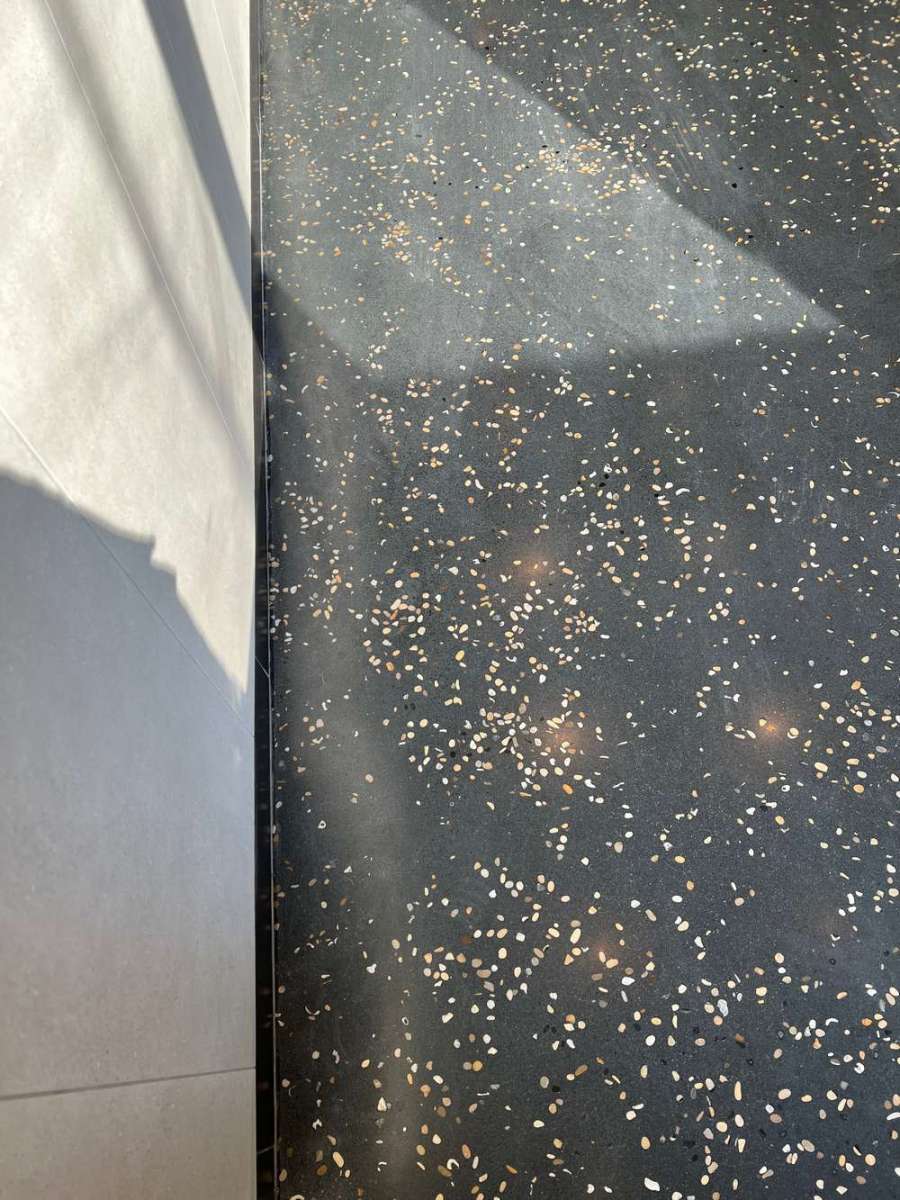
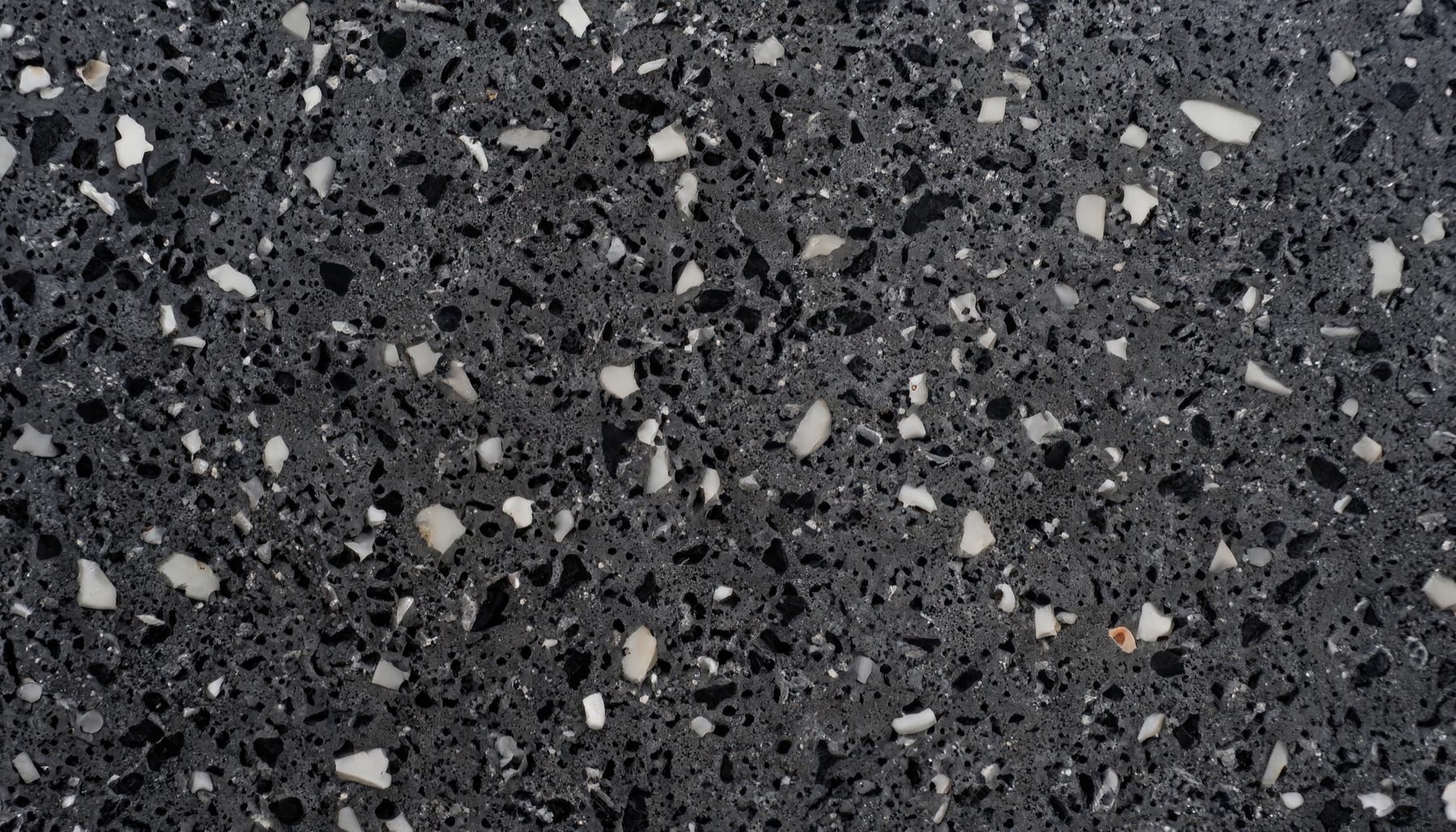
- Bold statements: Deep charcoal or black backgrounds with contrasting white marble and colored glass — suited to luxury retail and hospitality
- Earth tones: Warm terracotta and ochre tones with natural stone aggregate — connecting to the regional landscape
Aggregate Sizes and Patterns
The size of aggregate chips dramatically affects the character of the finished floor. Fine aggregates (1-6mm) create a subtle, almost textile-like texture suitable for refined residential spaces. Medium aggregates (6-18mm) deliver the classic terrazzo look with clearly visible chip patterns. Large aggregates (18-38mm) produce bold, dramatic floors that command attention in expansive commercial lobbies and public spaces.
Designers can also vary aggregate density — from sparse, widely spaced chips that let the matrix color dominate, to densely packed compositions where the aggregate becomes the primary visual element.
Custom Logos, Borders, and Inlays
Terrazzo excels at incorporating custom design elements. Metal divider strips — typically brass, zinc, or aluminum — can define geometric patterns, wayfinding paths, or branded logos directly within the floor surface. This capability makes terrazzo particularly popular for corporate headquarters, boutique hotels, and upscale retail environments where the floor becomes an integral part of the brand identity.
Residential Applications
The perception of terrazzo as exclusively commercial has been thoroughly dispelled. Homeowners across Israel are increasingly choosing terrazzo for its combination of beauty, practicality, and longevity.
Living Rooms and Open-Plan Spaces
Terrazzo creates a seamless, uninterrupted surface that visually expands open-plan living areas. Its thermal mass helps regulate indoor temperatures — a significant advantage in Israel's climate, where the floor can absorb coolness from air conditioning during the day and release it gradually in the evening. Paired with underfloor heating, terrazzo maintains comfortable surface temperatures even during Jerusalem's cooler winter months.
Kitchens
Epoxy terrazzo is exceptionally well-suited to kitchen environments. Its seamless surface eliminates grout lines where bacteria and food debris can accumulate. When properly sealed, it resists staining from wine, oil, coffee, and acidic foods. Its durability withstands the demands of daily kitchen use, including dropped utensils and heavy foot traffic.
Bathrooms
With appropriate slip-resistant finishes, terrazzo is an excellent bathroom material. It can flow seamlessly from floor to shower walls and even across vanity surfaces, creating a cohesive spa-like environment. The absence of grout lines simplifies cleaning and eliminates the mold problems common with tiled bathrooms in Israel's humid coastal climate.
Outdoor Terraces and Balconies
Cementitious terrazzo systems are well-suited to outdoor applications, offering excellent UV resistance and the ability to withstand temperature fluctuations. For Israeli properties, outdoor terrazzo connects interior and exterior living spaces with a consistent material language — a design strategy that maximizes the sense of space in compact Mediterranean homes.
Commercial Applications
In Israel's dynamic commercial landscape, terrazzo is proving its value across diverse sectors.
Hotels and Hospitality
Israel's booming hospitality industry, from boutique hotels in Jaffa to luxury resorts along the Dead Sea, is embracing terrazzo for its ability to create memorable first impressions. Hotel lobbies, reception areas, restaurants, and pool surrounds all benefit from terrazzo's durability and design flexibility. The material's longevity is particularly attractive to hotel operators who need floors that maintain their appearance under heavy guest traffic for decades.
Restaurants and Cafes
Tel Aviv's thriving culinary scene has adopted terrazzo as a design signature. Its seamless surface simplifies the rigorous cleaning required in food service environments, while its aesthetic versatility allows restaurateurs to create distinctive atmospheres — from industrial-chic eateries in Florentin to refined dining establishments in Herzliya Pituach.
Retail Spaces
High-end retail brands value terrazzo's ability to embed logos and branded design elements directly into the floor. In shopping centers like Azrieli Mall and Ramat Aviv Mall, terrazzo provides the durability needed for extremely high foot traffic while maintaining an upscale appearance that reinforces brand positioning.
Offices and Corporate Spaces
Israel's technology sector, with its emphasis on innovative workspace design, is a natural fit for terrazzo. Open-plan offices in tech hubs across Tel Aviv, Herzliya, and Be'er Sheva use terrazzo to create polished, professional environments that resist the wear of heavy chair casters and constant foot traffic. The material's acoustic properties, when combined with appropriate underlayment, also contribute to reducing noise in busy workspaces.
Sustainability and Durability
In an era of growing environmental awareness, terrazzo's sustainability credentials are a significant part of its appeal.
Recycled and Natural Materials
Terrazzo can incorporate substantial quantities of recycled content. Recycled glass, reclaimed marble, crushed porcelain from manufacturing waste, and even post-consumer materials can serve as aggregates. Some modern terrazzo systems achieve up to 80% recycled content without any compromise in performance or aesthetics. The remaining components — natural stone chips, mineral pigments, and binding resins — are derived from abundant, low-impact sources.
Exceptional Lifespan
Perhaps terrazzo's greatest environmental advantage is its extraordinary longevity. A properly installed and maintained terrazzo floor can last 75 to 100 years or more. This lifespan dwarfs that of virtually every alternative flooring material:
- Carpet: 5-15 years before replacement
- Vinyl/LVT: 10-20 years
- Hardwood: 25-50 years (with refinishing)
- Ceramic tile: 25-50 years
- Terrazzo: 75-100+ years
Over a building's lifecycle, the total material consumption and waste generation of terrazzo is a fraction of that produced by flooring systems that require periodic replacement.
Low Maintenance Requirements
Terrazzo requires minimal maintenance to retain its appearance. Daily dust mopping and periodic damp mopping with a neutral pH cleaner are sufficient for routine care. Unlike carpet, it harbors no allergens. Unlike wood, it requires no periodic refinishing. Unlike tile, there are no grout lines to clean, reseal, or replace. When a terrazzo floor eventually dulls after years of service, it can be re-ground and re-polished — restoring its original luster without generating the waste of a full floor replacement.
Installation Process
Professional terrazzo installation is a multi-stage process that requires specialized equipment and experienced craftsmen. Understanding the process helps set realistic expectations for project timelines and logistics.
Step 1: Surface Preparation
The substrate must be structurally sound, clean, and properly profiled. For epoxy terrazzo, this typically involves diamond grinding or shot blasting the existing concrete to create a suitable bonding surface. Any cracks must be repaired, and moisture levels must be within acceptable limits — generally below 4% relative humidity for epoxy systems. A primer coat is applied to ensure proper adhesion between the substrate and the terrazzo layer.
Step 2: Divider Strip Installation
Metal or plastic divider strips are set into the primer according to the design layout. These strips serve multiple purposes: they control cracking, define design patterns, separate color fields, and can form decorative borders or logos. This stage requires precision craftsmanship, as the divider layout determines the final appearance of the floor.
Step 3: Mixing and Pouring
The terrazzo mixture — aggregate chips combined with the binding matrix — is mixed to the specified ratio and poured into the prepared sections. The material is spread evenly, typically using hand trowels and specialty tools, and compacted with heavy rollers to eliminate air pockets and ensure consistent density. For epoxy systems, the working time is limited, requiring efficient and coordinated application by the installation team.
Step 4: Curing
Epoxy terrazzo cures within 24-48 hours. Cementitious systems require 7-28 days, depending on environmental conditions. During curing, the floor must be protected from traffic, moisture, and temperature extremes.
Step 5: Grinding and Polishing
This is the stage that reveals the terrazzo's true character. Using progressively finer diamond abrasive pads — from coarse (50-100 grit) through medium (200-400 grit) to fine (800-3000 grit) — the surface is ground to expose the aggregate chips and then polished to the desired finish level. This process typically involves 5-7 grinding passes and generates significant amounts of slurry that must be managed properly.
Step 6: Grouting and Sealing
After grinding, any pinholes or minor voids are filled with a matching grout material. The surface is then sealed with a penetrating sealer or topical coating to protect against staining and simplify ongoing maintenance. The choice of sealer affects both the appearance (matte, satin, or gloss) and the floor's resistance to specific chemicals and contaminants.
Cost Considerations
Terrazzo represents a premium flooring investment. Understanding the factors that influence pricing helps clients make informed decisions and set realistic budgets.
Factors Affecting Price
- System type: Epoxy terrazzo ($80-200/m²) is generally less expensive than cementitious terrazzo ($100-250/m²) due to thinner application and faster installation
- Aggregate selection: Standard marble chips are most economical; recycled glass, mother of pearl, or semi-precious stones increase costs significantly
- Design complexity: Simple single-color fields cost less than multi-color designs with intricate divider strip patterns or custom logos
- Project size: Larger projects benefit from economies of scale in equipment mobilization and material purchasing
- Substrate condition: Extensive surface preparation, crack repair, or moisture mitigation adds to the total project cost
- Location and access: Upper-floor installations, sites with limited access, or projects in remote areas incur additional logistical costs
Return on Investment for Commercial Projects
While terrazzo's upfront cost exceeds that of many alternatives, its lifecycle economics are compelling. Consider a 500m² commercial space:
- Terrazzo (75-year lifespan): One installation plus periodic maintenance — total lifecycle cost approximately $70,000-$120,000
- Carpet (replaced every 10 years): 7-8 replacements over the same period — total lifecycle cost approximately $90,000-$160,000, plus disruption costs
- Vinyl/LVT (replaced every 15 years): 5 replacements — total lifecycle cost approximately $75,000-$125,000, plus disruption costs
When the indirect costs of business disruption during floor replacement are factored in, terrazzo frequently emerges as the most economical long-term choice for commercial applications. Additionally, terrazzo can contribute to higher property valuations, as it is recognized as a premium, permanent building feature.
Considering Terrazzo for Your Project?
Whether you are designing a private residence, renovating a commercial space, or planning a new hospitality venue, our team can guide you through every stage — from material selection and design development to installation and long-term maintenance planning.
Get Expert Advice