The flooring industry is undergoing significant transformation. Sustainability is no longer a nice-to-have — it's becoming a requirement. Combined with advances in material science and shifting design preferences, 2026 is shaping up to be a pivotal year for industrial and commercial flooring.
1. Sustainability Takes Center Stage
Environmental considerations are now driving specification decisions at every level:
Bio-Based Resins
New flooring systems incorporating plant-based components are entering the market. Bio-epoxies derived from vegetable oils and bio-polyols from castor beans are reducing dependence on petroleum-based raw materials. While not yet matching traditional systems in all performance metrics, the gap is closing rapidly.
Recycled Content
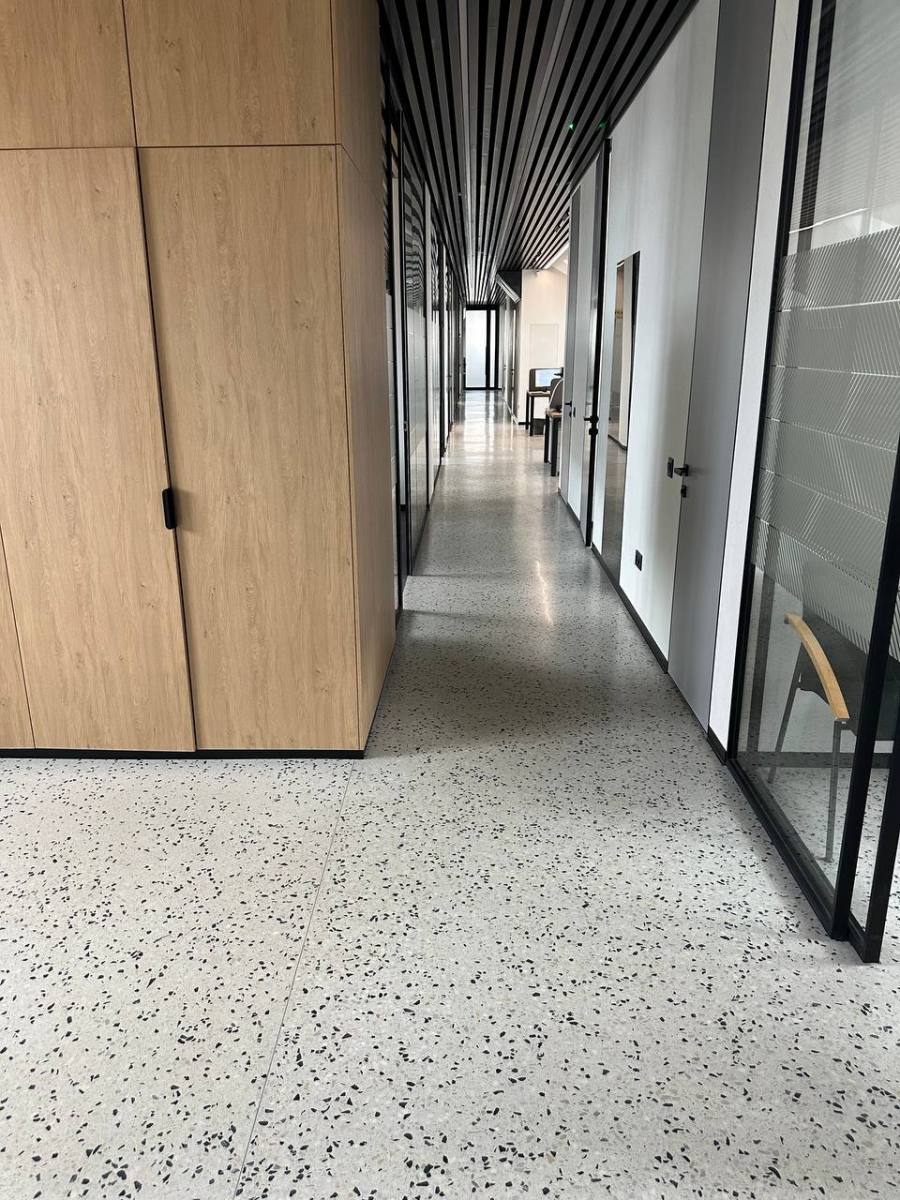
Terrazzo leads the way with aggregates from recycled glass, porcelain, and even post-consumer plastics. Some manufacturers now offer systems with up to 80% recycled content without compromising performance.
Carbon Footprint Transparency
Environmental Product Declarations (EPDs) are becoming standard. Specifiers increasingly demand lifecycle carbon data, and manufacturers are responding with detailed carbon accounting from raw material extraction through installation.
2. Biophilic Design Integration
The connection between natural environments and human wellbeing is driving design choices:
- Earth tones and natural color palettes dominate specifications
- Organic patterns and flowing designs replace rigid geometric layouts
- Material choices that evoke natural stone and wood textures
- Integration with living walls and planted areas
This trend is particularly strong in corporate offices, healthcare facilities, and educational institutions where occupant wellbeing directly impacts outcomes.
3. Performance-Focused Specifications
Beyond aesthetics, specifiers are demanding verifiable performance data:
Anti-Microbial Properties
Post-pandemic awareness has elevated hygiene requirements. Integrated antimicrobial technologies — from silver ion infusions to copper-based additives — are becoming standard in healthcare and food processing environments.
Slip Resistance Standards
More rigorous slip testing and documentation requirements are emerging globally. Expect increased demand for certified slip-resistant finishes that maintain performance over time.
Chemical Resistance Verification
Rather than generic claims, specifiers want third-party tested chemical resistance data for specific substances relevant to their environment.
4. Smart Floor Technology
Technology integration is moving from concept to reality:
Embedded Sensors
- Traffic pattern monitoring for retail analytics
- Fall detection in healthcare and senior living
- Load monitoring in warehouses and manufacturing
- Temperature and humidity sensing for facility management
Interactive Surfaces
LED-integrated floors for wayfinding, branding, and dynamic signage are moving beyond novelty to practical applications in large facilities where traditional signage is inadequate.
5. Aesthetic Directions
Large-Format Terrazzo
Oversized aggregate (up to 38mm chips) creates bold, statement-making floors. This dramatic scale works particularly well in large commercial spaces with high ceilings.
Neutral Minimalism
Monochromatic schemes in warm grays, soft beiges, and muted earth tones continue to dominate. The focus is on texture and subtle variation rather than color contrast.
Metallic Accents
Brass, copper, and bronze inlays and divider strips add warmth to otherwise neutral palettes. These metallic elements provide visual interest without overwhelming the space.
Matte Finishes
The high-gloss polish that once dominated is giving way to satin and matte finishes that hide wear, reduce glare, and feel more contemporary.
6. Installation Innovation
Faster Cure Systems
Demand for rapid-return systems continues growing. New formulations offer faster cure times without the strong odor traditionally associated with fast-cure products.
Modular Solutions
Pre-fabricated terrazzo and resinous flooring tiles enable faster installation and easier replacement of damaged sections. This modularity also supports design flexibility and future adaptability.
Low-VOC Formulations
Volatile Organic Compound regulations are tightening globally. Water-based and high-solids formulations now match or exceed the performance of traditional solvent-based systems.
Looking Ahead
The flooring industry in 2026 reflects broader societal shifts: environmental responsibility, human-centric design, and technological integration. Success for manufacturers, specifiers, and installers will require adapting to these evolving expectations while maintaining the performance and durability that industrial environments demand.
Ready to Future-Proof Your Floor?
Let's discuss how these trends apply to your next project.
Start the Conversation