
When it comes to modern seamless flooring, microtopping and epoxy are two of the most popular systems on the market. Both deliver beautiful, jointless surfaces, but they serve fundamentally different purposes. Microtopping is a thin, design-forward cementitious coating prized for its natural, tactile aesthetic. Epoxy is a high-performance resin system engineered to withstand heavy mechanical and chemical loads. Choosing between them — or combining them — depends on your space, your priorities, and the demands you place on your floor every day.
What Is Microtopping?
Microtopping, often marketed as microcement or microconcrete, is a polymer-modified cementitious overlay applied in ultra-thin layers of 1 to 3 millimeters. It consists of a blend of Portland cement, fine aggregates, polymers, and mineral pigments, sealed with a protective polyurethane or epoxy topcoat.
What sets microtopping apart is its hand-applied nature. Each surface is unique: the applicator uses a steel trowel to build up multiple thin layers, creating subtle variations in tone and texture that give the floor a distinctive, artisanal character. The result is a surface that feels warm and organic, reminiscent of polished concrete but far thinner and lighter.
Key Characteristics of Microtopping
- Thickness: 1-3 mm (can be applied over existing tiles, concrete, or screed)
- Weight: Approximately 3-5 kg/m², making it suitable for upper floors and renovation projects
- Finish: Matte, satin, or semi-gloss depending on the sealer
- Color range: Virtually unlimited through integral pigmentation
- Versatility: Can be applied to floors, walls, countertops, stairs, and even furniture
- Feel: Warm underfoot, compatible with underfloor heating systems
What Is Epoxy Flooring?
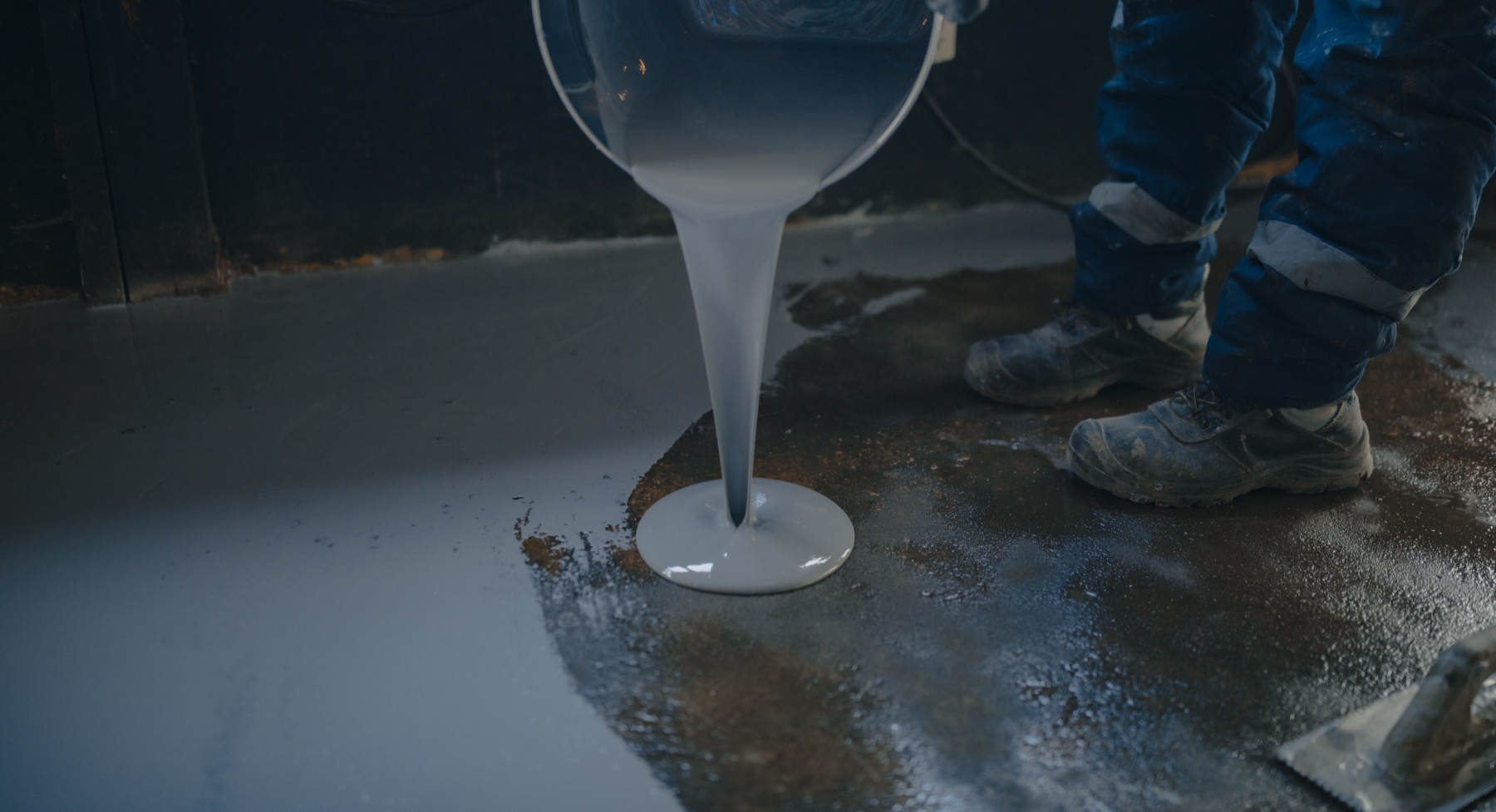
Epoxy flooring is a thermosetting resin system created by mixing an epoxy resin with a hardener. When these two components react, they form a rigid, highly cross-linked polymer that bonds tenaciously to the concrete substrate. The result is an exceptionally hard, seamless surface with outstanding chemical and abrasion resistance.
Epoxy systems range from thin-film coatings (0.3-0.5 mm) to self-leveling mortars (2-5 mm) and heavy-duty trowel-applied systems up to 9 mm thick. They can be formulated with anti-slip aggregates, decorative flakes, metallic pigments, or quartz broadcast for additional performance and visual appeal.
Key Characteristics of Epoxy
- Thickness: 0.3-9 mm depending on system type
- Weight: 5-15 kg/m² depending on thickness
- Finish: High-gloss, semi-gloss, satin, or matte
- Hardness: 80-85 Shore D, extremely abrasion-resistant
- Chemical resistance: Excellent against acids, alkalis, solvents, and oils
- Applications: Garages, warehouses, factories, laboratories, commercial kitchens
Head-to-Head Comparison
The table below summarizes how microtopping and epoxy stack up across the criteria that matter most when selecting a flooring system.
| Criteria | Microtopping | Epoxy |
|---|---|---|
| Thickness | 1-3 mm | 0.3-9 mm |
| Aesthetic | Natural, artisanal, warm | Sleek, glossy, industrial |
| Durability | Good (sealer-dependent) | Excellent (chemical + mechanical) |
| Cost (installed) | $50-120/m² | $40-150/m² |
| Installation Time | 3-5 days | 2-4 days |
| Best For | Residential, retail, hospitality | Industrial, garage, laboratory |
| Maintenance | Reseal every 3-5 years | Minimal; recoat every 7-10 years |
When to Choose Microtopping
Microtopping is the ideal choice when aesthetics and design flexibility are your top priorities. Its thin profile and lightweight composition make it the go-to solution for renovation projects where raising the floor height or adding structural load is not an option.
Residential Interiors
For living rooms, bedrooms, and open-plan kitchens, microtopping delivers a refined, contemporary look that complements minimalist and Mediterranean design styles alike. It pairs beautifully with natural wood, stone, and metal accents. Because it conducts heat efficiently, it works seamlessly with underfloor heating — an increasingly popular feature in Israeli homes.
Retail and Hospitality
Boutique hotels, cafes, showrooms, and high-end retail environments benefit from microtopping's bespoke, handcrafted character. Each floor has a unique cloud-like pattern that adds visual interest without overwhelming the space. The ability to apply the same material to walls and reception counters creates a unified design language.
Renovation and Overlay Projects
When working with existing tiles, marble, or concrete that you want to cover without demolition, microtopping is unmatched. It can be applied directly over most sound, stable substrates, saving significant time and cost on removal and disposal.
When to Choose Epoxy
Epoxy flooring excels in environments where performance, hygiene, and resistance to abuse are non-negotiable. Its chemical cross-linking creates a surface that can handle forklift traffic, chemical spills, and continuous heavy use.
Industrial Facilities and Warehouses
Manufacturing plants, logistics centers, and warehouses require flooring that can withstand rolling loads, point impacts, and abrasive wear. Epoxy systems rated for industrial use offer compressive strengths of 80-100 MPa and can be formulated with quartz aggregates for additional durability. Anti-slip textures can be built into the surface to meet workplace safety standards.
Garages and Parking Structures
Whether it is a private residential garage or a multi-level commercial parking facility, epoxy provides a dust-free, oil-resistant surface that is easy to clean and maintain. Hot tire pick-up resistance and chemical resistance to automotive fluids make it the preferred solution for vehicular areas.
Laboratories and Clean Rooms
Epoxy floors are seamless and non-porous, leaving no joints or gaps where bacteria, chemicals, or contaminants can accumulate. This makes them the standard choice for pharmaceutical labs, food processing facilities, and healthcare environments where hygiene is paramount.
Can You Combine Both?
Absolutely. A hybrid approach is more common than many property owners realize, and it often delivers the best of both worlds.
In mixed-use developments and large residential projects, it is entirely practical to use microtopping in the living areas, corridors, and feature walls while specifying epoxy in the utility rooms, garages, and service areas. Both systems can be applied over the same concrete substrate, and with careful color coordination, the transition between them can be virtually seamless.
Another hybrid strategy involves using an epoxy primer or base coat beneath a microtopping finish. The epoxy provides superior adhesion and moisture barrier properties, while the microtopping on top delivers the desired aesthetic. This approach is particularly effective in ground-floor spaces in Israel where rising moisture from the slab can be a concern.
For commercial projects, consider microtopping in the client-facing areas — lobbies, meeting rooms, reception halls — and epoxy in the back-of-house zones: kitchens, storage, mechanical rooms. This ensures every area has the flooring system best suited to its specific demands.
Not Sure Which to Choose?
Our flooring consultants will visit your site, assess the substrate condition, and recommend the system — or combination of systems — that matches your design vision, performance requirements, and budget. Consultation is free and comes with no obligation.
Get Expert Consultation