

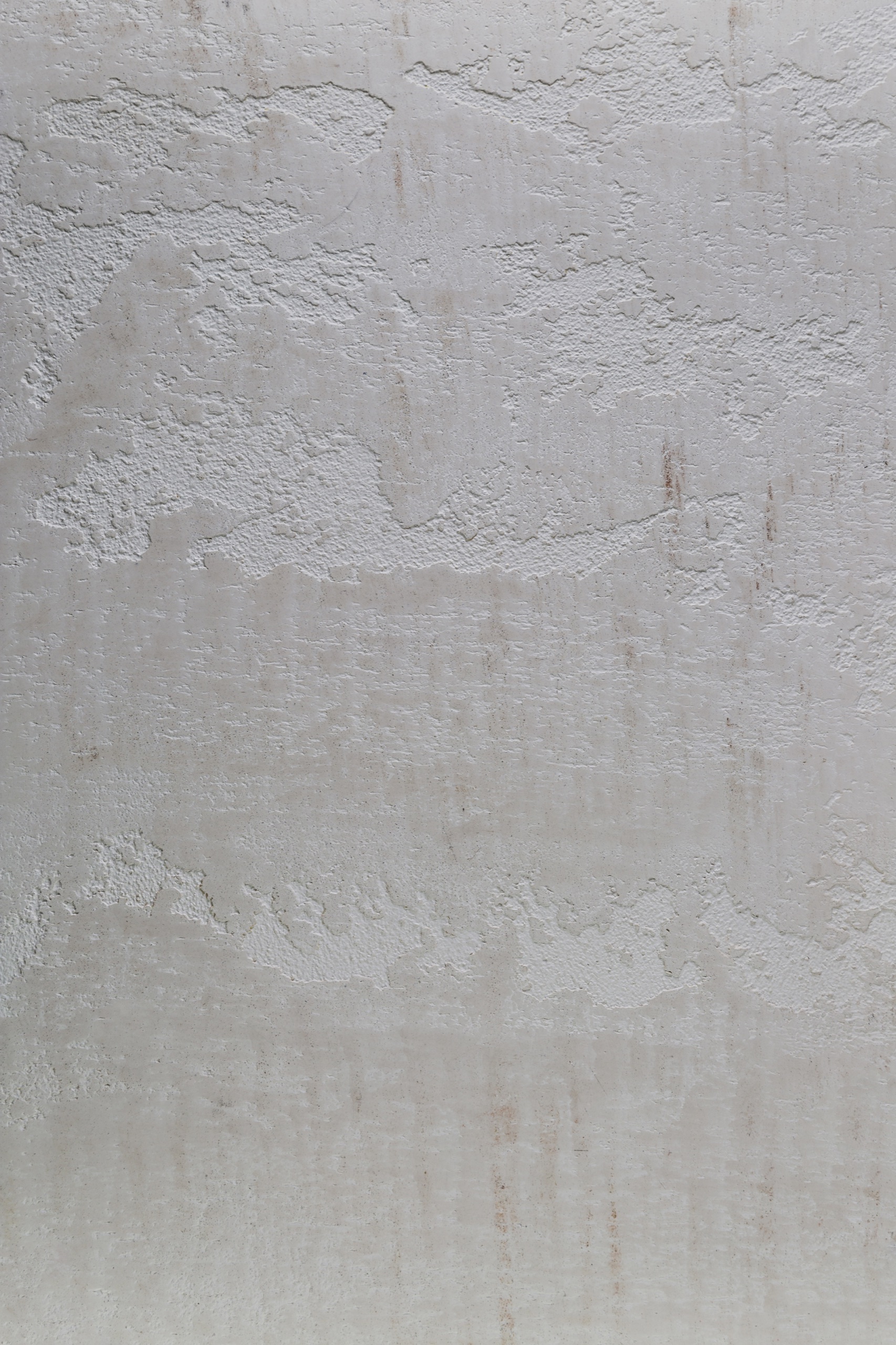
The ICRI Concrete Surface Profile is the only globally accepted spec for telling a contractor exactly how rough the concrete has to be before the coating goes on. It is not a comfort number. Every major coating warranty — Sika, MAPEI, MasterTop, Flowcrete, Stonhard, Mapei — explicitly references a minimum CSP. Deliver less profile than the spec demands and the manufacturer has a complete legal defense against any later delamination claim. This guide walks through every CSP from 1 to 10, the preparation method that produces it, and the coating thickness it supports.
What Is ICRI 310.2R-2013
ICRI Technical Guideline No. 310.2R-2013 — "Selecting and Specifying Concrete Surface Preparation for Sealers, Coatings, Polymer Overlays, and Concrete Repairs" — is the international reference document published by the American Concrete Repair Institute. It defines ten replica chips, manufactured by ICRI and licensed to DeFelsko, that serve as the visual benchmark for specifying and verifying preparation in the field. Each chip is a physical sample of a prepared concrete surface at a specific roughness; you set it next to the prepared floor under raking light and compare.
The replica-chip set has nine original profiles (CSP 1–9) defined in 1997 and one additional ultra-aggressive profile (CSP 10) added in the 2013 revision for very deep polymer overlays and structural repairs. The system is closed and exhaustive — there is no CSP 0 and there is no CSP 11; if the surface is outside the chart, you are no longer specifying a coating, you are specifying a structural rebuild.
The Ten CSP Profiles
| CSP | Description | Typical method | Typical coating use |
|---|---|---|---|
| CSP 1 | Nearly flat, very light texture | Acid etch (phosphoric, legacy) or very fine grind | Penetrating sealers, thin film stains |
| CSP 2 | Light shotblast or fine grind | Diamond grinding 60–120 grit | Thin-film sealers < 0.25 mm |
| CSP 3 | Light shotblast | Diamond grind 30/40 + light shotblast | High-build sealers, water-based epoxy < 0.5 mm |
| CSP 4 | Light scarification or medium shotblast | Shotblast small or medium shot | 100% solids epoxy 0.4–1 mm |
| CSP 5 | Medium shotblast | Shotblast medium shot | Self-leveling epoxy 1.5–3 mm |
| CSP 6 | Medium scarification or heavy shotblast | Shotblast large shot | Polymer overlays 3–6 mm, polyurethane cement |
| CSP 7 | Heavy abrasive blast or light scarification | Heavy shotblast, scarifier | Trowel-applied epoxy mortar 6 mm+ |
| CSP 8 | Scarification | Scarifier or heavy shotblast | Polymer overlays 6–10 mm |
| CSP 9 | Heavy scarification or scabbling | Scabbler, needle gun, hydroblasting | Polymer overlay > 10 mm, concrete repair |
| CSP 10 | Very rough, amplitude > 6 mm (added 2013) | Scabbling, hydrodemolition | Structural concrete repair, deep overlays |
The 0.5 mm Rule
The single most useful rule of thumb for matching CSP to coating thickness:
CSP × 0.5 mm ≈ minimum coating thickness needed.
This is approximate but it has held up across thousands of installations. The logic is simple: the prepared concrete has peaks and valleys at a specific average amplitude; the coating has to be at least thick enough that the topcoat covers the highest peaks without leaving aggregate exposed. CSP 5 (medium shotblast) implies peak-to-valley amplitude around 1.5–2.5 mm — a 1.5 mm self-leveling epoxy is the floor of what works on CSP 5; anything thinner and the aggregate "telegraphs" through the topcoat as visible texture.
Two failure modes from violating the rule:
- Under-profiled. The coating sits on a glassy, dense surface. Mechanical key is insufficient. First 6–18 months, the bond fails — usually at thermal-cycling stress concentrators (floor drains, doorways, edges). Manifest as blisters, edge curl, or full sheet delamination.
- Over-profiled. The coating cannot bridge the deep valleys. Pinholes form where air is trapped during cure. Aggregate telegraphs through the topcoat as visible texture. Material consumption goes up 30–50% above design quantity, blowing the bid. On thin sealers and stains, the texture is permanent and unfixable.
CSP for the Five Most Common Israeli Projects
Penthouse Microtopping (CSP 2–3)
Microcement or microtopping at 1.5–3 mm total system thickness. Diamond grind to CSP 2–3 with vacuum-assisted grinder for dust control. Most Israeli penthouses are renovation work — the slab is occupied, neighboring units cannot tolerate dust, and the contractor uses Husqvarna PG 280 or HTC 270 with M-class HEPA vacuum. Shot blasting is rarely an option here.
Industrial Self-Leveling Epoxy (CSP 5)
Sikafloor-263 SL, MasterTop 1235SL, Mapefloor I 302 SL — the workhorse 2–3 mm self-leveling industrial epoxy. CSP 5 is mandatory. Open floor > 100 m² — captive shot blasting with Blastrac 1-15D or larger, edges by diamond grinding. This is the most common warehouse and light-industrial spec in Israel.
Food Plant PU-Cement (CSP 6)
Ucrete UD200, Flowfresh HF, Sikafloor-21 PurCem — 6–9 mm polyurethane cement for food, beverage, dairy, pharma. CSP 6 minimum — most TDSs spec CSP 6–7 for heavy slurry-applied systems. Heavy shot blasting with large shot, plus diamond-grind edges. Captive shot blasting is mandatory in operating food plants for hygiene compliance.
Trowelled Epoxy Mortar Bay Floor (CSP 7)
Sikafloor-31 EpoCem mortar, Stonhard Stonclad HT, Mapefloor I 320 — 6–12 mm trowelled epoxy mortar for forklift traffic, mechanical workshops, and dock levellers. CSP 7. Heavy shot blast + scarifier in combination. Scarifier alone produces the right CSP but leaves a bruised layer that must be removed by follow-up grinding or shot blasting before priming.
Slab Repair Before Topping (CSP 8–10)
When the slab itself needs structural repair, you are now in the CSP 8–10 zone. Scabbling, needle gun, hydrodemolition. The work follows EN 1504 family standards, not just the coating manufacturer's TDS. Floor coating goes on after the repair has cured and been profiled to the appropriate CSP for the system spec — typically back down to CSP 5–6 for the final coating layer.
How to Verify CSP in the Field
Verification is by visual comparison against the ICRI replica chips under raking light. Procedure:
- Wait for the prepared surface to be clean and dust-free. Vacuum if necessary. Surface must be at ambient temperature, not freshly heated by the grinding pass.
- Lay the relevant ICRI chip flat on the floor next to a representative area. Replica chips come in two sets — sealer/coating prep (CSP 1–3, 4–6) and overlay/repair prep (CSP 7–10). Buy both sets from DeFelsko or ICRI.
- Raking light — a flashlight or work lamp held at a low angle across the chip and the floor — exaggerates the texture. Compare at chip-to-floor distance of 50–100 mm.
- Document with a photograph: chip + floor side by side in the same frame, with the test location identified by tape or chalk. Repeat every 100 m² and at every transition zone.
- Repeat after any cleanup, repair, or re-prep work. Profile does not survive a wash-down; if you wet-clean a CSP 5 surface and let dust settle, you have to re-verify.
The photographic record is what defends the contractor against a warranty claim two years later. Without it, the only evidence is the inspector's word. With it, the manufacturer either pays the warranty claim or admits the product is at fault.
Three Common Mistakes
- Specifying "CSP 3–5" as a range. The manufacturer specifies a minimum — call it CSP 5 minimum. A range allows the contractor to deliver CSP 3 and argue it is "within spec." Always specify a floor, not a band.
- Trusting visual inspection alone. Eyes adapt to the average — a CSP 4 floor next to a CSP 6 floor looks like CSP 5 because the brain averages. Always compare against a physical chip.
- Verifying after primer is down. Primer fills the profile. By the time you inspect after primer, the CSP is gone and cannot be recovered without grinding off the primer.
Where to Buy ICRI Chips
Two sources, both ship internationally:
- DeFelsko (USA) — manufactures the licensed replica chip set. Two sets: CSP 1–3 / CSP 4–6 (sealer/coating prep) and CSP 7–10 (overlay/repair prep). Approximately $80–$120 per set. Order at defelsko.com/csp.
- ICRI store — the publishing organization sells the chips directly along with the 310.2R-2013 guideline PDF (~$30 USD).
A contractor that does not own ICRI chips is not actually verifying preparation. A floor system installed without chip verification is uninsurable under the manufacturer's warranty, full stop.
Read next: The six mechanical preparation methods — shot blast, grind, scarify, scabble · Moisture testing: ASTM F2170, F1869, calcium chloride, Tramex · Pull-off testing per ASTM D7234 and EN 1542.
Sources
- ICRI Technical Guideline 310.2R-2013 — Selecting and Specifying Concrete Surface Preparation for Sealers, Coatings, Polymer Overlays, and Concrete Repairs.
- DeFelsko — CSP Chips reference set and application notes.
- TCC Materials — Concrete Surface Preparation and Profiles chart.
- Stronghold Floors — Epoxy Floor Coatings: Concrete Surface Profiles Explained.
- Sika USA, MAPEI, Master Builders Solutions — flooring system technical data sheets specifying CSP requirements.