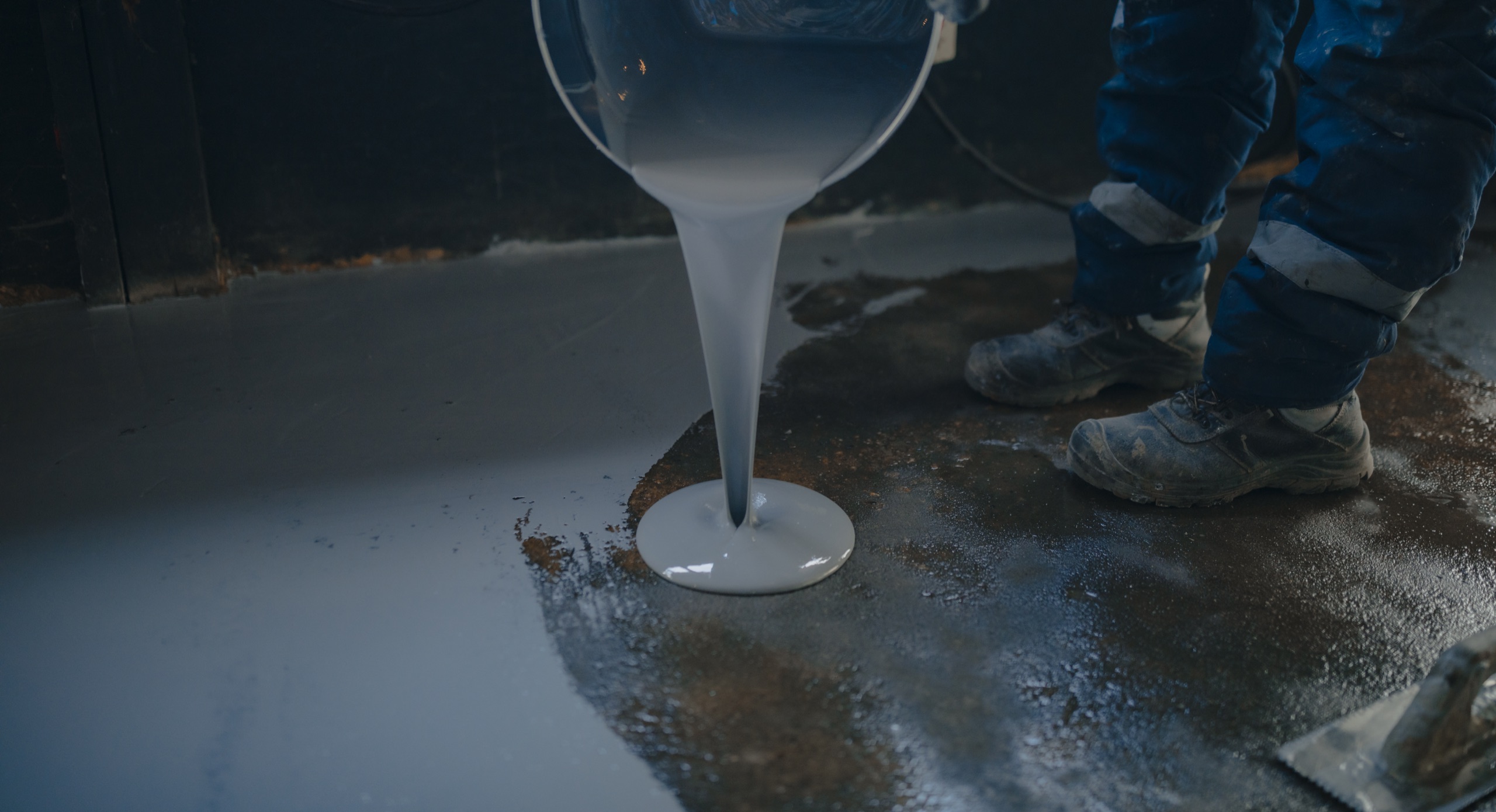
Floor installer quality drives ~60% of post-install outcomes — material brand drives the other 40%. The wrong installer applying the right product produces failure; the right installer applying a budget product often delivers an acceptable floor. This procurement guide walks the eight questions to ask before hiring an applicator. None of them are optional. All of them have specific answers — vague responses are themselves a warning sign.
Use this guide alongside the brand profile pages (brands hub) and the system comparisons (comparisons hub) — the brand and applicator are the two halves of the floor decision.
Question 1 of 8What manufacturer training do you have for this specific product?
The good answer: "I am a [Sika / Mapei / Topciment / Altro / etc.] approved applicator. Training certificate from [year]. Here is the certificate." The certificate should name the specific product line — Sikafloor PurCem certification is different from Sikafloor Comfortfloor certification.
The vague answer: "I have been laying floors for fifteen years, I know what I am doing." This may even be true, but it does not address product-specific training. For microcement, PU-cement, ESD floors, and specialty systems, manufacturer-specific training matters. The hand that knows generic epoxy can ruin a specialty system.
The red flag: "Manufacturer training is not necessary, I can read the TDS." Walk away. Either he is incompetent or he is willing to void the warranty by installing without certification.
Question 2 of 8Can I see three projects you completed in the last 18 months in this product category?
The good answer: "Here is the address of three projects. Two are accessible — call the building manager. One is private residential — I can show photos and connect you with the client. All three were [PU-cement / microcement / safety vinyl / etc.] in the last 18 months."
The vague answer: "I've done lots of projects, here is my Instagram." Instagram photos are selection-biased and may be lifted from other installers. Insist on contactable references and reachable buildings.
The red flag: "I just got my certification, this would be my first project on this product." Sometimes acceptable for low-stakes work; never acceptable for hospital, brewery, premium hospitality, or any project where failure is expensive.
Question 3 of 8What is your substrate inspection protocol before quoting?
The good answer: "I will do an on-site substrate audit before quoting. I will check ICRI CSP profile, run an ASTM F2170 moisture test (or specify F1869 if appropriate), sound the slab for hollow areas, and identify any cracks or contamination. I will document all of this with photos and a written substrate report. The quote will reflect the substrate's actual condition, not a generic assumption."
The vague answer: "I'll come and have a look, then quote." Probably means he is going to eyeball the floor and price based on area × his standard rate, with no documented substrate verification. Generic quotes produce generic outcomes.
Question 4 of 8How do you handle warranty documentation?
The good answer: "I document the project for warranty registration. I record substrate moisture readings, ICRI CSP profile (photos with replica chip), batch numbers of all materials used, primer cure window, application date, ambient conditions during install (temperature + humidity), and final inspection photos. This file becomes part of the warranty claim if anything fails."
The vague answer: "The manufacturer handles the warranty, that's their problem." The manufacturer requires the documentation to honor the warranty. Without it, the warranty is unenforceable when the installer disappears and the owner needs the manufacturer to step in.
The red flag: "Warranty is not realistic on this kind of floor, you should not worry about it." Walk away.
Question 5 of 8What is your insurance coverage?
The good answer: Public liability ≥ ₪2M, professional indemnity for the work scope, and worker safety insurance. Documents on request. For commercial and industrial work, expect numbers higher than these.
The vague answer: "I have insurance through the contractor union." Probably true; verify the specific coverage matches the project scope. Generic union coverage may not cover the value of an industrial floor failure.
The red flag: "Insurance is your responsibility as the building owner." This is the contractor describing the absence of his own insurance. Walk away.
Question 6 of 8What is your project schedule discipline?
The good answer: "I will provide a written schedule with start date, milestone dates per stage (substrate prep, primer, base coat, finish coat, sealer, owner walk-through), and a defined complete-by date. I will report progress against the schedule weekly. Delays caused by the substrate (water in slab, unexpected damage) will be communicated within 24 hours of discovery."
The vague answer: "About two weeks, depends on the weather." On a hospital, brewery, or anything where production downtime costs money, "depends" is unacceptable. On residential renovation it is acceptable but verify by reference whether his schedule discipline holds in practice.
Question 7 of 8How do you handle the seven-day PU sealer cure in wet rooms?
The good answer: "The bathroom must be blocked for seven full days after the second PU sealer coat. I cannot release the bathroom for use before that period regardless of client pressure. I will document this requirement in writing at contract signing. If the client cannot accept the cure window, microcement may not be the right system."
The vague answer: "Actually 3-4 days is fine in practice, the TDS is conservative." Voids the warranty and produces a peeling sealer within months. This is the #1 microcement-bathroom failure mode in IL practice.
The red flag: "We can speed-cure it with a heater." No. PU sealer cure is chemistry, not temperature alone. Walk away.
Question 8 of 8How is payment structured?
The good answer: "20-30% deposit at signing for material order, 30-40% at substrate prep completion, 20-30% at base coat completion, final 15-20% at owner walk-through after the sealer cure window. Last payment is held by the owner until the floor is verified."
The vague answer: "70% upfront, 30% at completion." Pushes most of the financial risk onto the owner. Reasonable applicators do not need 70% upfront for material; 30% is typical. Negotiate.
The red flag: "100% upfront required, cash preferred." Walk away. This is either a cash-flow problem or a scam.
Common mistakes in installer selection
- Choosing the lowest quote. In flooring, the lowest quote almost always reflects missing scope — substrate prep cost not included, sealer renewal not addressed, warranty documentation missing. The true cost of the lowest-quote installer is typically 30-50% higher in 5-year total cost than a properly-quoted mid-range installer.
- Hiring the brand-relationship installer for a different brand. A Sika-trained installer doing a Topciment project, or vice versa, ignores the product-specific training that drives outcome. Match installer to product.
- Hiring by Instagram aesthetic. Photographs are selection-biased and may be unrelated to the installer's actual work. Verify by visiting installed projects in person.
- Skipping the contract. Verbal agreements produce disputes. Get the scope, schedule, payment, and warranty terms in writing before any material order.
- Releasing the bathroom early. Owner pressure or schedule pressure causes the 7-day PU cure to be skipped. Floor peels in 3-6 months. Owner blames the installer; installer blames the owner. Avoidable failure.
Where Floor.DSGN can help
We do not install floors — we help specify them. For Israeli clients in residential renovation, commercial, hospitality, healthcare, or industrial work, we can:
- Audit your installer's substrate inspection methodology before signing the contract
- Review the proposed scope of work for missing items (sealer renewal, substrate prep, warranty documentation)
- Validate the manufacturer certification for the specific product
- Cross-check the installer's reference projects against the proposed work
- Review the contract terms for warranty enforceability
Independent review before signing typically costs ~₪1,500-3,000 [verify] and saves orders of magnitude in failure cost downstream.
Final read
The right installer is the most important specification decision after system class and brand. A wrong installer ruins the best brand at the worst time. Run the eight questions above before any commitment. The installer who answers all eight cleanly is rare and worth the wait; the installer who deflects on any of them tells you everything about how the project will go.
Related: 5-question decision tree · Brand profiles hub · Comparison articles hub · Substrate repair categories · Microcement wet-rooms spec sequence.
Sources
- ICRI 310.2R-2013 — substrate preparation reference (installer competency benchmark).
- FeRFA Type 1-8 — resin floor classifications (installer training basis).
- Sika, Mapei, Topciment, Altro applicator certification programmes.
- Israeli builders union — contractor insurance requirements.