

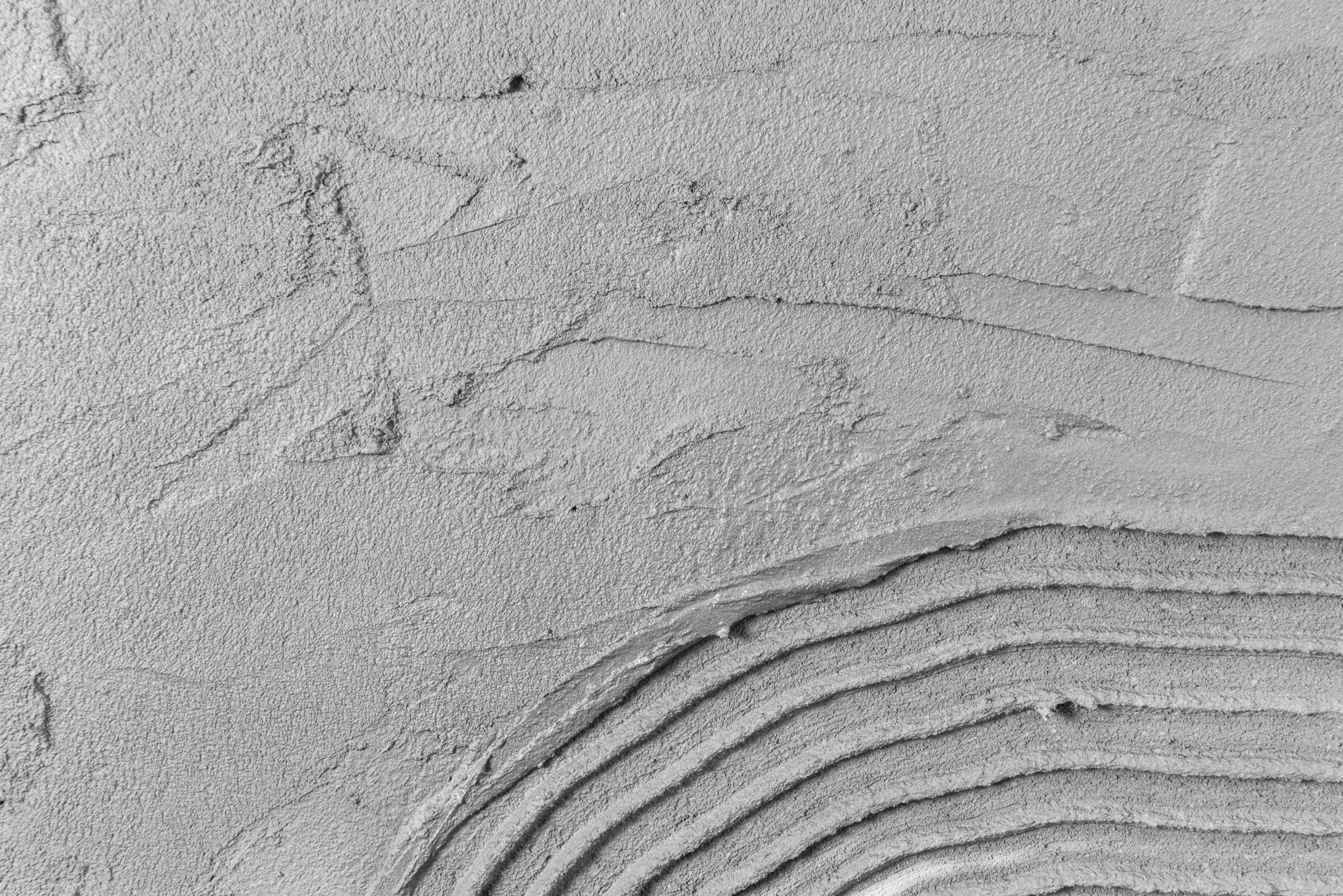
Every microcement failure has a root cause traceable to one of four places: substrate, mix, sealer, or cure. There are no random failures. The Smartcret, Topciment, microcementec, and Seamless Overlays problem catalogues, cross-checked against IL applicator field notes, all converge on the same nine modes. This article documents each one — what it looks like, what causes it, and the install detail that stops it before it shows up two years later in a warranty claim.
Why these nine and not more
"Microcement cracked" is not a failure mode. It is the visible outcome of one of several distinct events. Treating the symptom — patching the crack — without identifying which of the underlying mechanisms produced it guarantees the next crack appears in twelve to fifteen months at the same location. The nine modes below cover ~95% of post-install complaints catalogued in the major brand problem guides (Smartcret, Topciment, Seamless Overlays, microcementec).
1. Hairline cracking
Substrate movement · Missing decoupling
What it looks like
Thread-width cracks that follow lines invisible on the surface — substrate joints, tile grout lines below, shrinkage lines in the screed. Cracks appear within the first season of temperature swing, often the first winter or the first summer.
Why
2 mm of cement-polymer microcement has no flexural capacity to bridge a moving joint. The substrate moves a fraction of a millimetre; the microcement, bonded rigidly, has nowhere to go but split. This is not a product defect. It is a missing detail.
Prevent it
- Honour every existing structural joint with a matching joint at the microcement surface (filled with PU sealant later, not microcement).
- Use decoupling membrane (Schlüter DITRA, Mapei Mapeguard, equivalent) over screed and over tile-on-tile installations.
- Embed fibreglass mesh in the base coat at every junction: substrate-to-wall, two substrates meeting, around drains and floor outlets.
- Never apply over screed less than 28 days cured. Cement shrinkage continues for ~28 days; applying earlier guarantees cracks.
2. Larger structural cracks
Building settlement · Joint disrespect
What it looks like
Cracks 0.5 mm or wider, often straight, sometimes with offset at the edges. Frequently aligned with the building's structural grid, expansion joints, or known shrinkage cracks in the slab below.
Why
The microcement spanned a structural joint that the installer thought could be hidden. Structural joints exist for a reason — they are designed to absorb building movement. Bridging one with rigid finish material guarantees the finish material fails first.
Prevent it
- Survey every structural joint in the substrate before specification. Mark them on a drawing. Each one must continue through the microcement as a visible joint.
- Discuss with the architect and the owner whether the joint can be made design-feature (a metal inlay, a grout line, a strip of complementary material).
- Where the owner refuses a visible joint over a structural joint, decline the project. The failure is on the floor, not on the joint.
3. Colour drift and blotchy patches
Inconsistent mix · High humidity · Uneven trowel
What it looks like
Patches of darker and lighter tone across the same nominal panel. Often visible only in raking light or after the sealer goes on. Hardest to fix retroactively — partial sanding rarely restores tone.
Why
Three contributing causes, often combined. Mixing a partial bag changes the cement-to-resin ratio; high relative humidity slows resin film formation and changes pigment migration; varying trowel pressure between two installers on one panel changes the surface compaction and therefore the colour.
Prevent it
- Mix full bags only. Never mix half a bag for "just this corner".
- Control room conditions: relative humidity ≤ 60%, temperature 18–24°C during application and the first 24 hours of cure.
- One trowel hand per panel. If two installers work the same room, divide by panel breaks, not by alternating strokes.
- If a panel goes blotchy and is caught early (within 48 h), a light sand + restorative coat usually corrects. Past 48 h, the matrix has set; the only repair is to re-coat the full panel.
4. Visible trowel marks
Premature water evaporation · Wrong ambient conditions
What it looks like
Sharp linear marks following the trowel stroke that remain visible after the sealer is applied. Particularly bad in direct sunlight on south-facing rooms.
Why
Surface water evaporated faster than the installer could close the trowel marks. The mix went off in place. Common in sun-warmed rooms, hot dry weather, and rooms with draughts running across the work.
Prevent it
- Block direct sunlight on the work area. Close blinds; tape paper over windows if needed.
- Switch off HVAC moving air across the panel during cure.
- Schedule application outside peak summer afternoons. In IL practice, August coastal work is best done before 11:00 or after 17:00.
- If marks appear in service, a heavy re-sand + thin restorative coat is the only proper repair.
5. Surface scratches
Sealer wear · Furniture without protection
What it looks like
Lines and arcs cut into the sealer, sometimes through to the microcement base. Most common pattern: arc around a chair leg, line where a kitchen stool dragged.
Why
The sealer wore down to the point where it no longer protects the matrix. Or the sealer is fine but furniture without felt pads is dragging point-loads across it.
Prevent it
- Felt or PTFE pads on every piece of moving furniture. Mandatory in handover.
- Renew the sealer on schedule: every 2 years in wet zones, every 4–5 years in dry zones.
- Tell the owner at sale: this is a finish, not industrial flooring. Drag-load is the enemy.
6. Sealer milkiness or gloss loss
Sealer aged out · Especially in wet zones
What it looks like
The previously clear or even sheen sealer goes cloudy, fogged, or visibly mottled. Worst in showers and around sinks.
Why
The PU sealer film is hydrolysing — water has worked into the polymer matrix and broken some bonds. The film stops being transparent and stops being a barrier.
Prevent it
- Schedule sealer renewal: 2 years in showers and wet kitchen zones, 4–5 years elsewhere. Add a calendar reminder at handover.
- If the sealer goes milky, a single sand + new sealer pass restores. Do not skip the sand — new sealer will not bond to aged sealer.
- Specify a high-end PU sealer for wet zones (e.g. FEST TURBO 2-component); cheap acrylic sealers fail in months.
7. Colour fade outdoors
UV exposure · Chlorine and salt around pools
What it looks like
Dark colours go washed-out in 6–18 months. Pool decks lose pigment depth around the splash line first. Outdoor terraces fade in a band parallel to the sun's seasonal arc.
Why
Pigments that work indoors are not necessarily UV-stable. Cheap pigments degrade; binders without UV-stabiliser yellow or lose film integrity. In pool environments, free chlorine and salt accelerate the breakdown.
Prevent it
- Specify UV-stable product for outdoor use. Topciment Atlanttic Aquaciment is the industry reference for pool-side IL projects.
- Use UV-stable PU sealer outdoors — aliphatic PU not aromatic. Aromatic PU yellows.
- Limit dark colours outdoors. Greys, off-whites, sand tones hold longer.
- Tell the owner outdoor microcement carries a different lifetime profile from indoor. Three to five years before a refresh is typical.
8. Sealer peel in showers
Inadequate cure before first water exposure
What it looks like
The PU film lifts at the edge of the wet zone, then peels back as water gets behind it. Usually visible within three months of the shower entering use.
Why
The 2-component PU sealer needs seven full days to cure to design hardness and water resistance. Water contact before that point gets into the film as it is still polymerising; the cure completes around water-soluble entrapment, weakening the film.
Prevent it
- Block the bathroom for seven days after the second PU coat. No exceptions. Owners must be told this in writing at contract signing.
- Provide a temporary alternative if the bathroom is the only one — guest bathroom, hotel night, neighbour arrangement. Plan it before starting work.
- If peel appears in service, full sealer removal and re-application of the wet zone is the only proper repair. Patching is futile — water travels.
9. Efflorescence (white bloom)
Moisture rising through substrate
What it looks like
A whitish powdery or crystalline bloom on the surface, especially near floor-wall junctions, around floor outlets, and on ground-floor installations over slab-on-grade with no vapour barrier below.
Why
Water moving through the substrate dissolves calcium hydroxide from the cement, carries it to the surface, and deposits it as calcium carbonate as the water evaporates. The bloom itself is harmless; what it tells you about the substrate is the real problem.
Prevent it
- Test substrate moisture before specifying microcement — ASTM F2170 RH probe is the standard. Above 75% RH at depth, do not proceed without correcting the source.
- Above-grade installations rarely have this problem; ground-floor work needs a vapour barrier under the screed or a moisture-mitigation primer at the surface.
- Never use a vapour-impermeable sealer where moisture might rise from below. Sealer will trap moisture, lift, and peel.
- If efflorescence appears, address the moisture source first. Surface cleaning with dilute acid or specialised efflorescence remover is purely cosmetic — the moisture will redeposit the bloom within months.
What this means for spec-writing
Every failure mode above is preventable with a detail at specification or install time. None are random. Read this list as a checklist before you write a microcement spec — substrate moisture tested, joints honoured, decoupling specified, mesh embedded, PU cure blocked, sealer schedule on the handover document. Skipping any line is not a saving — it is deferred warranty cost with interest.
The next article walks through what to ask the substrate before you ever touch a bag of cement.
Continue reading: Microcement binder chemistry: four families compared · Substrate moisture testing: ASTM F2170 / F1869 / CM / Tramex · ICRI CSP 1–10 surface profile guide.
Sources
- Smartcret — Problems with microcement: yes, they exist; avoiding them is easy
- Topciment — Microcement problems and tips to avoid them
- Seamless Overlays — Cracking, discolouration and how to avoid them
- microcementec — Fissures in microcement: causes and effective solutions
- ASTM F2170 — Standard Test Method for Determining Relative Humidity in Concrete Floor Slabs Using in situ Probes.
- EN 14411 — Ceramic tiles — Definitions, classification, characteristics (referenced for tile-substrate decoupling).
- ICRI 310.2R-2013 — Selecting and Specifying Concrete Surface Preparation.