

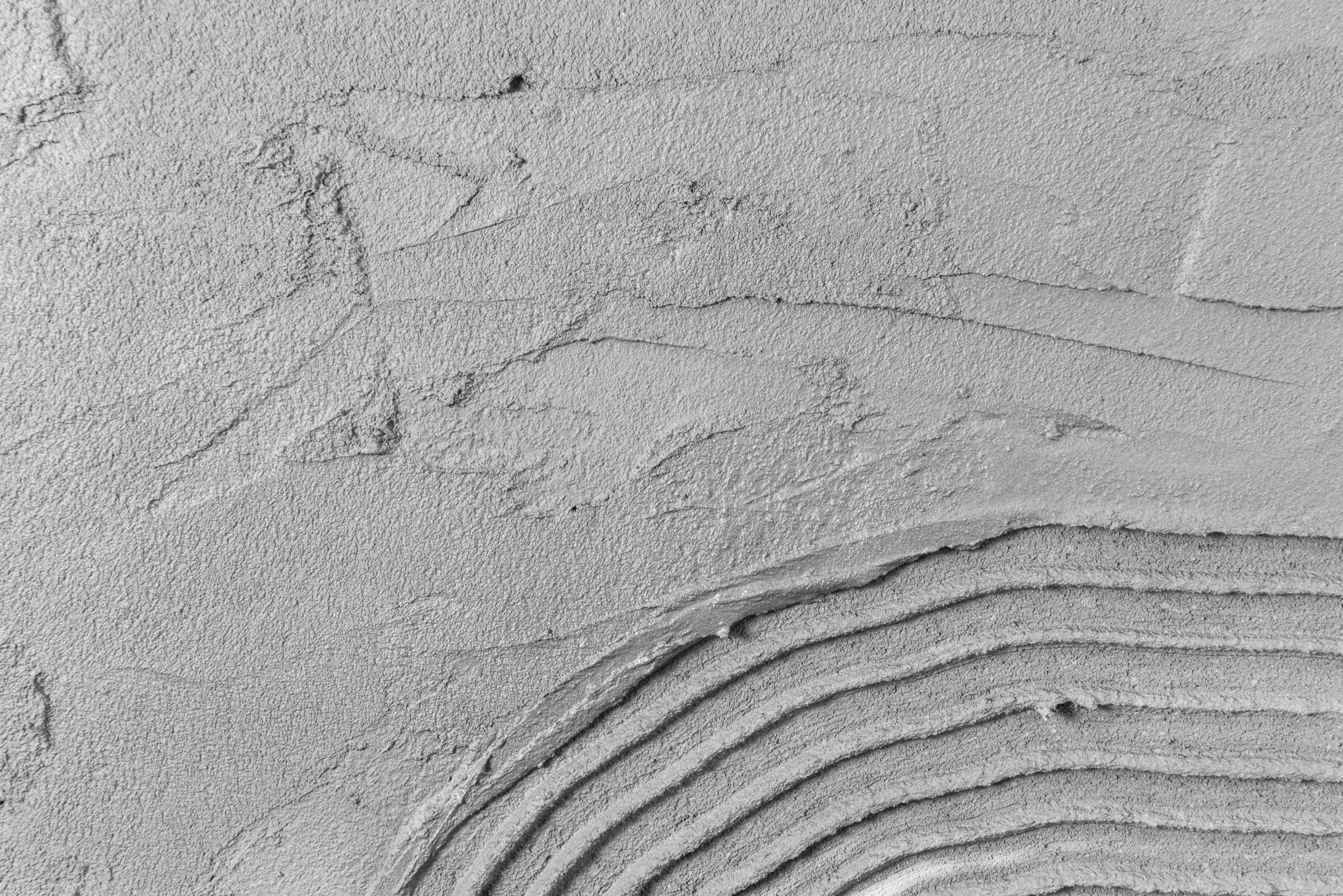
Marmorino is the Venetian wall-plaster category that dates back to the 16th century: slaked lime mixed with crushed marble dust, applied in multiple coats, polished to a mirror finish. It is not a single brand — Stucco Italiano, Vasari, Meoded, FirmoLux, and several smaller Italian producers all manufacture lime-and-marble plaster under the Marmorino name. For luxury hotel lobbies, hospitality, gallery walls, and high-design residential, Marmorino is the wall finish that pairs with microcement floor work to deliver an entirely-mineral material story.
The producer ecosystem — who makes Marmorino
Marmorino is a generic category name across producers, similar to "champagne" before AOC protection — the term describes the technique, not a single brand. The serious Italian producers each have proprietary formulations within the technique:
- Stucco Italiano — wide colour palette, fine and medium granulometry SKUs (Marmorino Fine, Classico, Carrara), strong US distribution.
- Vasari — premium US-Italian brand, large North American hospitality reference list (Soho House, etc.), pigment-rich palette.
- Meoded — Italian-Israeli producer with deep IL channel, strong on architect-facing colour-card system, custom IL-pigment matching.
- FirmoLux — US producer with broader décor-product range; Marmorino is one of multiple lime-finish SKUs in their catalogue.
- Smaller Italian regional producers shipping under "Marmorino Veneziano" labels — quality varies; verify supplier before spec.
For IL specifiers, Meoded is the most accessible local channel; Stucco Italiano and Vasari are imported through specialty distributors for higher-budget projects. The visible quality difference between producers is minimal at properly-skilled applicator level — the brand choice often comes down to channel and pigment palette more than technical performance.
What the technique actually is
Marmorino is built on three classical ingredients:
- Slaked lime putty (calcium hydroxide, Ca(OH)₂) — the binder. Slaked, aged, and stored months before use. Older putty produces smoother, easier-to-polish finishes.
- Crushed marble + marble dust — the aggregate, ranging from 0.5 mm grit down to 50 μm dust. Particle distribution determines the visual character: coarser reads as matt textured, finer polishes to mirror.
- Lime-fast mineral pigments — only oxide-based pigments survive the high-pH lime matrix. No synthetic dyes, no organic pigments. The colour palette is constrained to earth tones, oxides, and lime-stable mineral colours — but is wide within that constraint.
Application is in 2–4 thin coats, each ~0.3–0.5 mm. Cure is by carbonation: atmospheric CO₂ reacts with the lime to form calcium carbonate (CaCO₃) — the same chemistry as natural marble and limestone. The wall, slowly, becomes stone. Full hardness arrives in weeks to months. Final polish is done with a clean steel trowel (ferro), pressing the surface to align mineral particles and produce the characteristic mirror sheen.
Where Marmorino wins
- Heritage credential and design vocabulary. For luxury hotels, museums, galleries, hospitality, and high-design residential, Marmorino reads as authentic. Cement-polymer microcement on the wall reads as modern; Marmorino reads as Italian heritage.
- Polishable to mirror. No cement-polymer microcement reaches Marmorino's mirror polish. The visual depth of properly polished Marmorino is unique.
- Material coherence with cementitious floor. Both are mineral, both breathe, both age gracefully. The combination of Marmorino wall + polished concrete or microcement floor delivers entirely-mineral interiors that age into the space rather than ageing out of it.
- Light bouncing. Polished Marmorino reflects ambient light with depth — the surface reads as warm at sunrise, cool at noon, deep at evening. Acrylic paint on a wall does not have this property.
Where Marmorino loses
- Skilled applicator required. Marmorino is technique-driven. A poor applicator produces a flat, lifeless surface that costs as much as a great Marmorino but reads as ordinary plaster. The IL applicator pool with multi-year Marmorino experience is under twenty people.
- Cure timing. Full hardness in weeks to months. The wall is visually finished much sooner but mechanically soft until carbonation completes. Tight-deadline projects suffer.
- Price. Higher than premium microcement (~₪500–₪900 per m² installed for an IL Marmorino feature wall, vs ~₪450–₪750 for premium microcement). Heritage credential and finish depth justify the premium for the right project; over-spec for cost-sensitive work.
- Not for floors. Lime is intrinsically softer than cement. Marmorino can be applied to light-traffic feature floors but heavy commercial or industrial traffic is wrong target.
- Pigment palette is constrained. Only lime-fast oxides. The palette is wide within that — but it does not include high-chroma synthetic colours. Designers wanting saturated lime-incompatible colours need to move to acrylic paint.
The pairing with FloorDSGN floor work
Marmorino is the natural wall partner for:
- Polished concrete floor + Marmorino wall — both mineral, both lime/cement family, both polishable. The aesthetic continuity is total.
- Microcement floor (Topciment Marmolife specifically) + Marmorino wall — the cement-polymer Marmolife on the floor reads as visually similar to lime Marmorino on the wall, with the floor's higher mechanical performance and the wall's authentic finish depth.
- Tadelakt floor (rare) + Marmorino wall — both pure-lime, period-correct Mediterranean / North African heritage. For specialist projects with conservation requirements.
For specifiers: when a client asks for "Italian luxury wall finish" alongside a serious decorative floor, Marmorino closes the conversation. Verify which producer (Meoded for IL channel ease, Stucco Italiano or Vasari for premium import) by phone before signing.
Final read
Marmorino is the right specification for feature walls in luxury residential, hospitality, museum, and gallery projects where heritage credential, polishable mirror finish, and material coherence with cementitious floors are valued. It is the wrong specification for budget-driven projects, tight-deadline work, or any floor application above light residential traffic. The technique demands a skilled applicator — confirm the IL applicator pool by reference projects before committing.
Related: Microcement 7-way comparison (Marmolife alternative) · Lime chemistry deep dive · Keim mineral paint (compatible wall paint partner).
Sources
- Stucco Italiano Marmorino Fine
- Meoded — Marmorino plaster application guide
- Vasari product catalogues (US-Italian).
- EN 998-1 — Specification for mortar for masonry: rendering and plastering mortar (lime plaster classification).